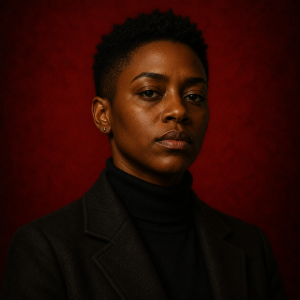
In an interview published Thursday by The Guardian, Olivia Colman described how making Jimpa — a new film in which she plays the adult daughter of a gay septuagenarian played by John Lithgow — surfaced grief about her own late father, saying he would have sat and cried through the entire picture. The film, which follows Colman’s character as she travels from Australia to Amsterdam with her husband and teenage child to visit a father whose life has always exceeded her understanding of it, opens questions about queer recognition across generations that prestige cinema rarely sustains long enough to answer honestly.
That a major awards-circuit film is now doing this work is not incidental. It is, rather, a symptom of a structural vacancy: the institutions that might have held this conversation — elder care systems, public schools, family health practices — have, across much of the English-speaking world, either retreated from LGBTQ-inclusive programming under political pressure or never meaningfully entered it for older cohorts in the first place. Jimpa arrives into that vacancy, and the question it forces is whether cinema can substitute for what democratic governance has declined to provide.
The Mythology the Film Disturbs
Liberal family mythology has long rested on a particular narrative of progress: the young lead, the old follow, and eventually everyone arrives at acceptance. It is a tidy story, and it is largely false. As Pew Research Center surveys have documented across multiple cycles, LGBTQ adults over sixty remain among the most socially isolated demographic cohorts in wealthy nations, their estrangements from family often dating to decades before the cultural consensus on marriage equality shifted. The children who rejected or were rejected by gay and lesbian parents in the 1980s and 1990s are now middle-aged; the parents are elderly or gone. The reconciliation arc that liberalism promised was, for many, simply never completed.
Jimpa, from what The Guardian’s reporting on the film and its production suggests, refuses the comfort of late-arriving resolution. Lithgow’s character is described as often nude, unapologetically physical, fully inhabited in a life his daughter has spent years at arm’s length from. The teenage grandchild, meanwhile, arrives at the Amsterdam flat already further along in queer self-understanding than the adult generation standing between them. That triangulation — grandparent, estranged child, queer grandchild — is not a new dramatic structure, but placing a septuagenarian’s body and desire at its center is a deliberate provocation against the convention that queer elderhood is a subject for documentary, not drama.
When cinema is doing the affective labor that elder care systems have abandoned, the applause at a premiere is also, in some sense, a political indictment.
What Institutions Left Behind
The policy landscape surrounding LGBTQ seniors has worsened in measurable ways since the mid-2020s. Across several U.S. states, as the ACLU and Human Rights Watch have separately tracked, elder care facilities receiving public funding have faced weakened anti-discrimination enforcement, while federally funded aging programs have seen LGBTQ-specific outreach scaled back or eliminated under successive budget pressures. In the United Kingdom, BBC reporting over the past year has noted persistent gaps in NHS provision for older LGBT patients, particularly around social isolation and end-of-life planning. The infrastructure of recognition — the kind that tells an elderly gay man that his history is legible to the system caring for him — is thin and getting thinner.
Into that thinness steps a film with a major studio platform, two Oscar-winning leads, and a marketing apparatus capable of reaching the adult children who are, statistically, the audience most likely to have unfinished business of exactly this kind. Colman’s candor in The Guardian interview — her acknowledgment that her own filial relationship contained ruptures she can now only mourn — is not incidental color. It is the film’s argument made flesh: that the progressive cultural consensus arrived after many of the conversations it required had already closed.
The risk, of course, is that Jimpa functions primarily as absolution — a two-hour permission slip for audiences to feel the grief without undertaking the structural repair. Cinema has always been capable of producing catharsis that substitutes for action rather than motivating it. Whether this film escapes that trap will depend on what its distributors, its reviewers, and its institutional partners — if any exist — make of it once the festival circuit is done. For now, it is enough to note that the conversation is happening in a multiplex rather than a parliament, and to ask why that is, and whether we are comfortable with the answer.

Naomi Feldstein is the magazine’s lead culture writer. She moves between literary criticism, intellectual history, and the politics of the cultural institutions — universities, museums, prestige publishing — that produce and police the American liberal imagination.