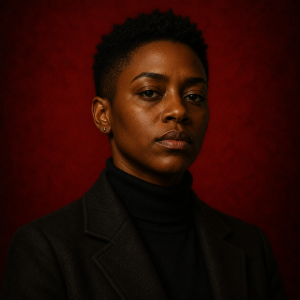
The Guardian reported this week that British author Donna Fisher has won the inaugural Libraro prize — a £50,000 award for an unpublished manuscript — with a novel exploring cancel culture in the post-#MeToo era. The prize, Libraro says, was designed to bypass the traditional gatekeepers of the book industry by letting readers vote directly on manuscripts uploaded to the platform by writers. Fisher’s win was framed as a triumph of democratic literary culture. It is worth asking what democracy actually looks like when the ballot box is owned by a venture-backed platform.
The nut of this story is not about publishing. It is about a recurring move in the platform economy: take unpaid community labour, repackage it as participation, and collect the data and attention infrastructure that labour generates. Libraro is doing to publishing what Patreon did to fan support, what Substack did to newsletter readership, and what Kick is doing to streaming moderation — promising disintermediation while quietly installing itself as the new intermediary. The agent and the acquisitions editor are gone. The platform remains.
Who does the reading, and who owns the read?
The voting model Libraro built requires readers to engage with uploaded manuscripts — to read, assess, shortlist, and rank unpublished work. That is editorial labour. In a traditional publishing house, it is performed by paid slush-pile readers, editorial assistants, and acquiring editors. At literary prizes with conventional structures, it is performed by named judges receiving honoraria or at minimum public credit. Libraro has distributed that same cognitive work across its user base and categorised it as community engagement.
This is not a neutral reframing. Every vote cast on the platform generates behavioural data: which genres hold readers past the first chapter, which narrative structures produce completion rates, which cover copy drives click-throughs. That data does not belong to Donna Fisher. It does not belong to the readers who generated it by spending hours with manuscripts. It belongs to Libraro. The platform monetises the aggregate attention of a reading community that believes it is participating in a literary movement.
Libraro didn’t remove the gatekeeper — it replaced the editor with an algorithm and the slush-pile reader with an unpaid crowd, then called the substitution liberation.
The language Libraro uses — sidestepping barricades, reader-led, democratic — draws directly from the anti-elitism playbook that every disruptive platform has deployed since at least the early 2010s. The Verge has documented this rhetorical pattern extensively in the creator-economy space: the promise is always that the platform removes the middleman, and the reality is always that the platform is the middleman, with better branding and worse accountability. Substack positioned itself as a refuge from corporate editorial control; it is now a publishing company with the same power over writer livelihoods as any imprint, and fewer of the contractual protections. Libraro is running the same play in a different vertical.
The writer’s deal is also worse than it looks
Fisher’s £50,000 is real money, and her win is genuinely notable. But the structural terms under which writers upload manuscripts to Libraro deserve scrutiny that the prize announcement does not invite. When a writer submits a manuscript to a literary agent or a publisher, the terms of any subsequent rights transfer are governed by contracts with legal standing, negotiated (however unequally) between parties with defined obligations. When a writer uploads to Libraro, the governing document is a terms-of-service agreement that the platform can revise unilaterally.
The question of what Libraro retains — in perpetuity, across territories, for data-training or recommendation-engine purposes — is not answered in the press coverage of Fisher’s win. It rarely is. The Electronic Frontier Foundation has flagged this pattern repeatedly in the context of creative-platform terms: the rights that platforms claim in user-uploaded content are typically far broader than users understand at the point of upload, and the asymmetry is structural, not accidental.
None of this diminishes Fisher’s novel, which by all reporting addresses genuinely contested cultural terrain. The problem is not the book. The problem is that a prize designed to celebrate writing has been structured in a way that extracts value from readers, obscures the labour conditions of writers, and concentrates data ownership in a platform whose incentives are not literary. The traditional publishing industry has real gatekeeping problems — barriers of class, race, and connection that a reader-vote model could theoretically address. But Libraro has not solved those problems. It has added a new layer of extraction on top of them and filed the paperwork under disruption.
The crowd voted. The platform won.

Jaz Reyes covers the part of the internet most newsrooms still treat as a foreign country: Twitch streams, Kick contracts, YouTube monetisation policies, TikTok algorithm flips, Discord moderation fights, the slow-motion labour disputes inside fandoms. They write from inside the culture, not above it — but also without the influencer-class loyalties that make most platform coverage read like a press release. A digital-native millennial-Z border citizen who has read enough Mark Fisher and Sianne Ngai to make the streamers nervous and enough VOD timestamps to make the academics nervous too.