Hundreds of Israeli settlers, led by Finance Minister Bezalel Smotrich, forced their way into Joseph’s Tomb in the occupied West Bank city of Nablus in the early hours of Wednesday morning, Middle East Eye reported on Thursday. Israeli troops raided parts of the city ahead of the incursion, sealed checkpoints, and provided continuous armed escort throughout. Smotrich was not travelling as a private worshipper. He was travelling as a minister of the Israeli government, with the Israeli military as his personal security apparatus, into a Palestinian city that has no say in whether he enters or under what conditions.
That distinction — between a religious visit and a state-backed territorial assertion — is the entire point. Joseph’s Tomb sits inside Nablus, a city administered under the Palestinian Authority and designated Area A under the Oslo framework, meaning full Palestinian civil and security control was supposed to apply. That designation has been eroding for years, accelerated deliberately. When a cabinet minister enters Area A under military cover, seals the roads around a Palestinian city at 3 a.m., and frames the exercise as devotion, he is not worshipping. He is governing. He is demonstrating, to settlers, to the Palestinian population, and to any Western diplomat still pretending otherwise, that the Israeli state regards the West Bank as sovereign Israeli territory subject to Israeli ministerial authority — and that the guns are there to prove it.
Holy sites as legal instruments of annexation
This is not the first time Joseph’s Tomb has served this function, and the choice of site is not incidental. The tomb has been a recurring flashpoint precisely because its contested status makes it useful. Far-right Israeli politicians and settler movement leaders have understood since at least the 1990s that repeated, militarised access to holy sites inside Palestinian population centres accomplishes several things simultaneously: it normalises Israeli military presence in nominally autonomous areas; it generates the kind of low-level friction that, when Palestinians respond, can be used to justify further military operations; and it creates facts on the ground that lawyers and diplomats later have to work around rather than reverse.
When a cabinet minister enters a Palestinian city under military escort and calls it prayer, the prayer is annexation.
B’Tselem, the Israeli human rights organisation, has documented over many years how the Israeli military’s management of settler movement through the West Bank — including escorted visits to holy sites — functions as a mechanism of dispossession rather than a neutral security arrangement. The pattern is consistent: the military secures the route, the settlers establish the precedent, the precedent becomes policy, the policy becomes law. The British did something structurally similar in Mandate Palestine in 1929, managing competing claims to holy sites in ways that entrenched colonial hierarchies while presenting themselves as neutral arbiters. The outcome of that management is still being counted in bodies.
Smotrich, as finance minister, also controls significant portions of the budget that funds West Bank settlement infrastructure. His presence at Joseph’s Tomb this week is therefore not separable from his ministerial function — it is an extension of it. Human Rights Watch has characterised Israeli policies in the West Bank, taken together, as constituting apartheid. Amnesty International reached the same conclusion. Neither organisation used the word carelessly, and neither limited the finding to Gaza.
Why Western governments still take his calls
The more pointed question — the one that Western foreign ministries have spent considerable energy not answering — is why Bezalel Smotrich continues to be received as a legitimate government interlocutor by the United States, the European Union, and the United Kingdom. He has stated, in terms that required no interpretation, that he regards Palestinians as having no national rights in the land, that he supports the destruction of Palestinian villages, and that he envisions permanent Israeli sovereignty over the entire West Bank. These are not fringe positions he holds privately; they are the policy platform on which he governs. He controls the Civil Administration that administers Palestinian life in the West Bank. He approves settlement expansion. He escorted settlers into Nablus under military cover this week.
The answer to why he remains a legitimate interlocutor is not complicated, even if it is uncomfortable to state plainly: Western governments have decided that their strategic relationship with Israel — arms transfers, intelligence cooperation, trade, and the domestic political cost of confronting the Israel lobby — is worth more than the legal and moral obligations they invoke when it is a different country doing the occupying. The Guardian and Al Jazeera have both reported extensively this year on the gap between European statements of concern about West Bank violence and the continuation of economic agreements that underwrite it. The gap is not a failure of policy. It is the policy.
Nablus is a city of roughly 200,000 people. On Wednesday morning, its roads were sealed by a foreign military so that a foreign cabinet minister could make a political point inside it. The residents who woke to checkpoints and armoured vehicles did not receive a diplomatic note of concern from Washington or Brussels. They received the checkpoints. A man named Nour ad-Din Jamal Salim, 22 years old, was shot and killed by Israeli forces in Nablus in March of this year during one of the military’s regular incursions into the city — one of dozens of Palestinians killed in the West Bank so far in 2026, in operations that rarely produce a press briefing and never produce accountability. His name is on a wall in the old city. Smotrich drove past it on the way in.
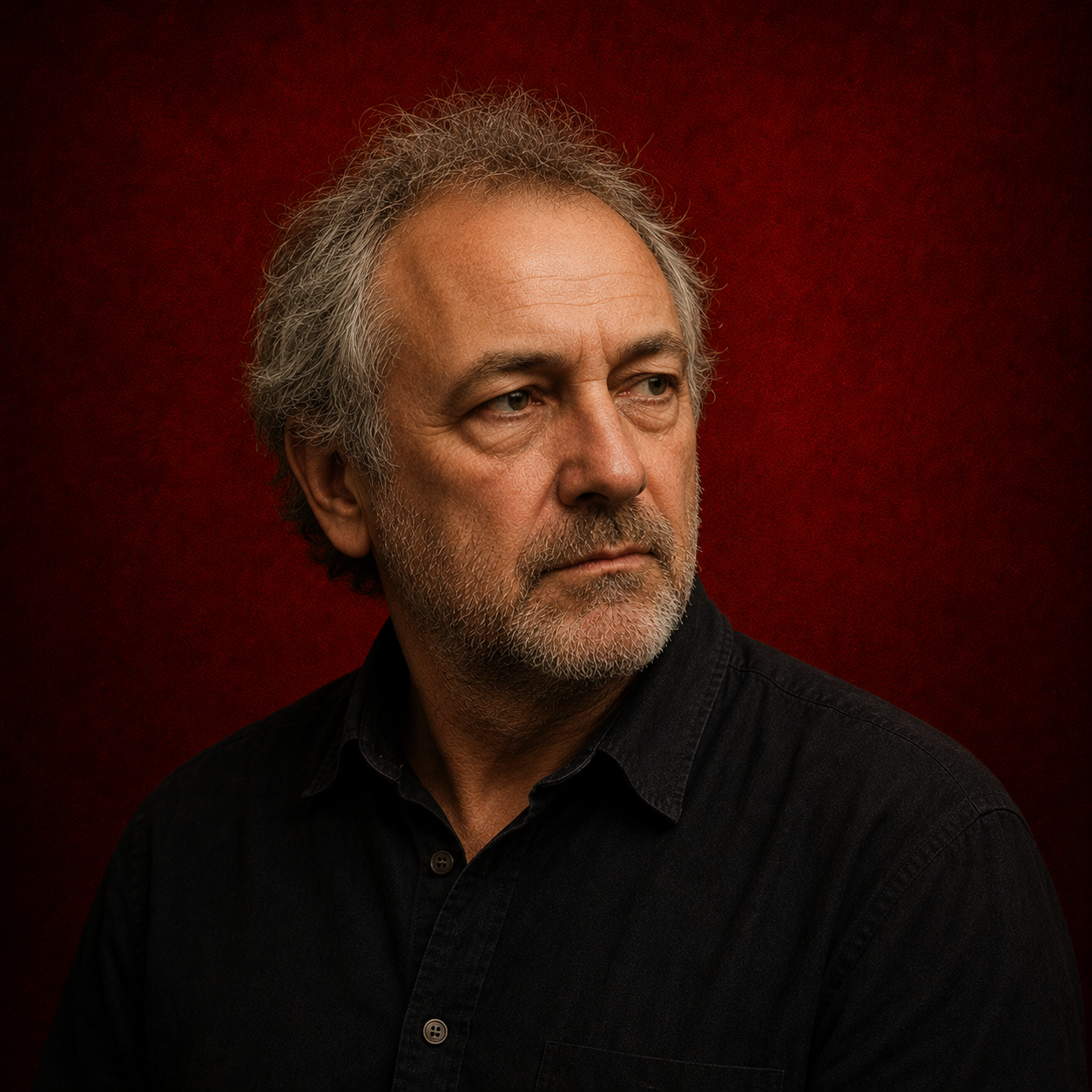
Conor Maguire has been writing from the Middle East for more than three decades. He has filed from Beirut, Baghdad, Cairo, Jerusalem, Gaza, Damascus, and a long list of cities the Western press now mostly visits by satellite. He treats the region not as a perpetual crisis but as the long aftermath of empire — Ottoman, British, French, American. He calls things by their names: occupation, apartheid, ethnic cleansing, genocide. He has been doing this long enough to be unmoved by official denials.