Tens of thousands of people are expected to fill central London on Saturday for major demonstrations marking the seventy-eighth anniversary of the Nakba, even as far-right campaigner Tommy Robinson leads a counter-mobilisation across the city, according to a Middle East Eye dispatch published this morning. The BBC and The Guardian have both reported that roughly 4,000 police officers will be deployed across the capital, including some 660 drawn from forces outside the Metropolitan Police area, in what amounts to one of the largest single-day public-order operations Britain has seen in years.
The convergence matters because it is not accidental. It is a diagram of where Britain stands in 2026: a government that has continued to license arms exports to Israel through an assault on Gaza that Amnesty International and Human Rights Watch have characterised in the most severe terms available to human-rights law; a street far right that has learned to weaponise anti-Muslim sentiment as a recruitment tool; and a broad civil society coalition that has, for more than nineteen months, refused to be exhausted into silence. These three forces do not exist in separate lanes. They produce each other.
Seventy-eight years and still counting
The word Nakba — catastrophe — entered the political vocabulary in 1948, when Zionist military operations drove more than 700,000 Palestinians from their homes and villages. The United Nations General Assembly had passed Resolution 194 in December of that year, affirming the right of those refugees to return. Seventy-eight years later, that resolution remains unimplemented. The marchers assembling in London today are, among other things, keeping a ledger.
That ledger has grown heavier. Since October 2023, the assault on Gaza has killed tens of thousands of Palestinian civilians — the precise toll remains contested and almost certainly undercounted, given the systematic destruction of the territory’s health infrastructure. The Lancet has published analysis suggesting that indirect deaths from disease, starvation, and the collapse of medical services may multiply the direct death toll several times over. Britain’s role is not peripheral. The UK government has licensed arms components — including parts used in F-35 aircraft — to Israel throughout the assault, a policy that has survived legal challenges and Cabinet reshuffles alike.
A government that sells weapons into an active siege and then expresses concern about humanitarian conditions is not contradicting itself — it is describing its actual policy.
The pro-Palestinian coalition marching today is not monolithic. It includes trade unionists, students, MPs from across the parliamentary left, faith communities, and a significant number of Jewish activists who explicitly reject the equation of Zionism with Jewish identity. What holds them together is a shared refusal of the framing that British officialdom prefers: that this is a conflict between two sides, rather than an occupation that has been under international legal censure since 1967, intensified into a siege, and now prosecuted with weapons partly manufactured in British factories.
Robinson’s rally and the politics of distraction
Tommy Robinson’s counter-demonstration is not, despite its organisers’ framing, a response to antisemitism. Robinson — whose legal name is Stephen Yaxley-Lennon and who has a documented history of incitement and criminal conviction — has built a political identity on anti-Muslim hostility, not solidarity with Jewish communities. His presence on the same day is a provocation designed to force a choice: between policing the pro-Palestinian crowd and policing his own supporters. The Metropolitan Police’s deployment of 4,000 officers suggests the institution understands the geometry of the trap, even if it cannot say so plainly.
The far right’s appropriation of pro-Israel rhetoric is a European pattern, not a British peculiarity. Movements that have spent decades targeting Jewish communities have discovered that aligning with Israeli state power grants them a temporary pass on their own histories. The pattern was visible in France in 2024 and has accelerated since. It does not represent a genuine reckoning with antisemitism; it represents antisemitism’s latest rebranding exercise.
Meanwhile, the people who will march today along a route that passes through the centre of a city that administered the 1917 Balfour Declaration — a letter written in London that helped set in motion what Palestinians call the catastrophe — are not, for the most part, asking for anything revolutionary. They are asking for an arms embargo. They are asking that British law, which technically prohibits the export of weapons likely to be used in serious violations of international humanitarian law, be applied. They are asking that the dead be counted and the living be allowed to return.
Among the tens of thousands expected on the streets of London today will be people who know the names of family members killed in Gaza in recent months. One of them is Hind Rajab, six years old, killed in January 2025 alongside the paramedics who went to rescue her — a name that has become, in the year since, a recurring presence on placards in cities from London to Jakarta. She will almost certainly be named again today, on the seventy-eighth anniversary of the catastrophe that made her people refugees, in a city whose government is still signing the export licences.
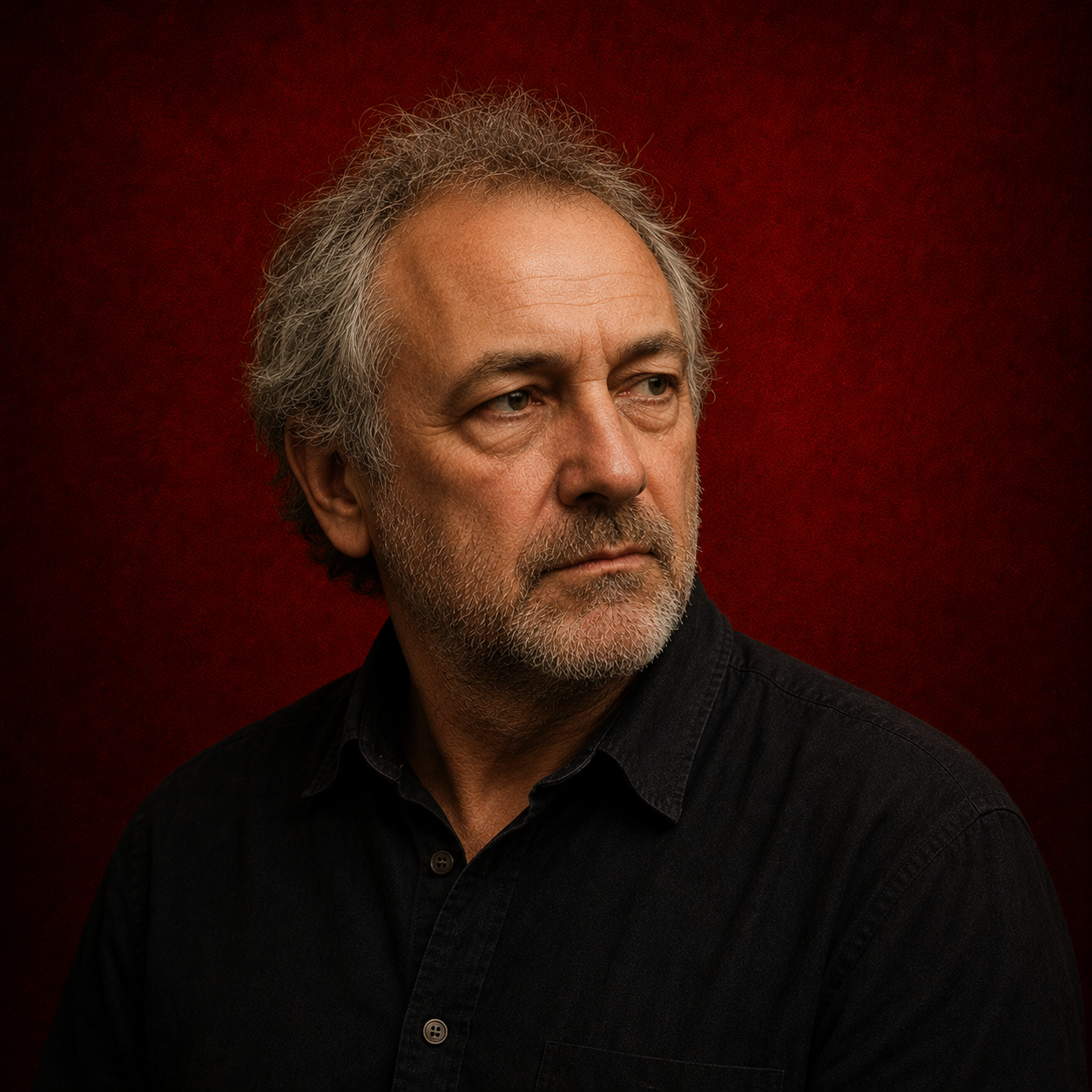
Conor Maguire has been writing from the Middle East for more than three decades. He has filed from Beirut, Baghdad, Cairo, Jerusalem, Gaza, Damascus, and a long list of cities the Western press now mostly visits by satellite. He treats the region not as a perpetual crisis but as the long aftermath of empire — Ottoman, British, French, American. He calls things by their names: occupation, apartheid, ethnic cleansing, genocide. He has been doing this long enough to be unmoved by official denials.