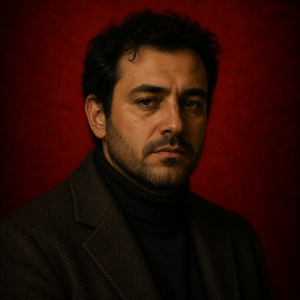
The Guardian reported this week that Real Madrid president Florentino Pérez is in serious discussions about returning José Mourinho to the club’s dugout, more than a decade after one of European football’s most publicly corrosive managerial exits. The talks, if confirmed, would reunite two figures whose first partnership between 2010 and 2013 was defined less by trophies than by institutional turbulence — public friction with senior players, strained relations with club staff, and a series of press conferences that functioned as theatrical power struggles. The reported interest lands at a moment when Real Madrid faces legal and regulatory pressures that have nothing to do with formation or squad depth.
That timing is the story. Marquee coaching appointments at clubs of Real Madrid’s scale are never purely sporting decisions. They are narrative events — managed carefully, leaked strategically, designed to dominate the back pages and, by extension, clear the front ones. When a club is simultaneously navigating ongoing legal exposure from the European Super League litigation, managing its relationship with the players’ union infrastructure across European football, and operating inside a broader political economy of billionaire-controlled sport, the announcement of a famous name in the dugout is institutional communication as much as it is squad management.
The Super League Shadow
Real Madrid remains among the most consequential actors in the European Super League project — a scheme that, when it collapsed publicly in April 2021, exposed the degree to which a handful of club presidents had been willing to restructure European football as a closed commercial property, stripping out promotion, relegation, and the competitive architecture that gives lower-league labor any leverage at all. The legal proceedings that followed have moved slowly through European courts, with questions about EU competition law and UEFA’s governance authority still generating filings and rulings years later. Pérez has been among the project’s most persistent defenders, arguing in public forums that the current Champions League model underserves the clubs that generate the sport’s largest revenues.
That argument, whatever its merits in a narrow financial sense, is structurally hostile to the interests of footballers outside the elite tier — the journeymen, the players in the second divisions of Spain and Germany and England whose livelihoods depend on a pyramid that rewards upward mobility. The Asociación de Futbolistas Españoles, Spain’s players’ union, has historically treated closed-league proposals with the same suspicion that Marvin Miller brought to baseball’s reserve clause: as ownership mechanisms that reduce player mobility and suppress wages everywhere the spotlight doesn’t reach.
A coaching spectacle is not a distraction from institutional power — it is institutional power, exercised in public, in real time.
Mourinho as Instrument
Mourinho himself is not a passive figure in this dynamic. His managerial brand — confrontational, media-saturating, unapologetically hierarchical — generates the kind of sustained coverage that makes it structurally difficult for journalists and supporters to sustain attention on governance questions. This is not an accusation of bad faith; it is a description of how the attention economy of elite football operates. When Curt Flood challenged baseball’s reserve clause in 1970, the owners’ first move was to make the story about Flood’s personality rather than the clause’s economics. The mechanism is older than sports television.
What distinguishes the current reported talks is the institutional context in which they arrive. Real Madrid’s wage bill, its debt structure relative to the ongoing stadium renovation, and its exposure in European legal proceedings are all matters of public record in broad outline, even if the granular figures remain inside the club’s closely held accounts. Against that backdrop, a return for one of the sport’s most famous managers does not merely fill a sporting vacancy — it resets the media cycle, repositions the club as bold and decisive, and gives supporters something to argue about that has nothing to do with boardroom liability.
That is a legitimate thing for a club to want. It is also, by any honest accounting, a political act dressed in a tracksuit. The reporting this week deserves to be read in that register — not as a transfer saga, but as a window into how the ownership class of European football manages its public image when the institutional pressures are highest. The line item nobody at Concha Espina wanted noticed: the talks were reported the same week that European court calendars showed continued movement in Super League-related proceedings.

Damon Reilly covers sports the way a labor reporter covers any other industry: by reading the collective-bargaining agreement before the box score. He follows the contract clauses, the ownership groups, the broadcast rights deals, and the slow politics of who is allowed to play and on what terms. He has been at this long enough to remember when Curt Flood was a recent memory.